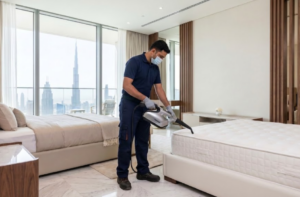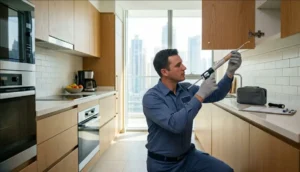
Knowing how to get rid of bed bugs starts with confirming the insect, containing affected belongings and arranging a treatment plan with follow-up. Repeated spraying, moving furniture between rooms and throwing away a mattress before inspection can make the job harder. Use the steps below to organise what happens before, during and after a professional visit in a UAE home.
This guide is for residents managing a suspected problem. If you are choosing between professional methods, use our separate heat versus chemical treatment comparison. A treatment quotation should be based on inspection rather than a photograph of a bite alone.

How to get rid of bed bugs: confirm the problem first
Look around mattress seams, bed joints, headboards and nearby furniture for insects, shed skins and dark marks. Photograph what you find in place, including a wider view showing its location. If you can safely collect an insect in a sealed clear container, keep it for identification rather than crushing every specimen.
The CDC’s bed bug overview describes the insects and common evidence around sleeping areas. It also explains that bites can resemble other insect bites. An itchy mark does not establish the pest or identify which property introduced it. Seek medical advice for a concerning reaction; pest identification and treatment of skin symptoms are separate questions.
Make a short record: room, exact location, date, photograph and whether you saw a moving insect or only an old mark. This is more useful to an inspector than a list of every product tried. Save earlier service reports and tell the provider about any recent pesticide use.
Contain belongings before carrying them elsewhere
Keep affected and cleaned items separate. Bag washable items before moving them to a laundry area and identify which bags still need treatment. Follow fabric care instructions and the treatment provider’s laundering instructions. Avoid overloading machines or assuming that an ordinary wash cycle has treated everything inside.
The EPA’s household bed bug control guide supports careful containment and preparation alongside control methods. Heat treatment of belongings depends on the equipment and material. A hot Dubai balcony or a parked car is not a verified substitute for a controlled process.
Do not carry an unwrapped mattress through the lift or leave infested furniture in a shared corridor. If an item must be discarded, coordinate containment and collection with building management so someone else does not take it home. Ask whether furniture can be treated before paying to replace it.

Prepare the room without spreading the work
Ask for the preparation sheet before the visit. A heat programme and a targeted pesticide programme may require different arrangements, especially for electronics, sensitive possessions, pets and medicines. Do not remove large quantities of belongings into another bedroom simply to make the affected room look tidy.
Use three labelled categories: ready for the provider to inspect, bagged for an agreed treatment, and already treated or checked. Keep the categories apart. Explain any mobility or lifting limits when booking so the provider can say who will move beds or access storage.
Agree what residents should do with bedding and room use while waiting. Where an inspector needs evidence, avoid dismantling every hiding place before documenting it. Access is important, but an empty-looking room is not the same as a completed preparation plan.
Choose a coordinated treatment and follow-up plan
Ask the company to record the rooms inspected, the evidence found, the method proposed and the conditions for any return visit. For pesticides, request the actual product information and written re-entry instructions. Do not assume that a low odour or an “organic” description means unrestricted access for children, pets or people with sensitivities.
Never use fuels, rubbing alcohol or improvised room heaters to treat the infestation. The EPA’s safety guidance warns against hazardous treatment ideas. Its US registration advice should not be confused with permission to use a product in the UAE; confirm the local product and authorised provider.
For an apartment, inform the landlord or building manager and ask whether adjacent rooms or units need inspection. Do not claim that a neighbour caused the infestation based on where you first noticed bites. Shared-property decisions need evidence and cooperation, not blame.
Track activity after the visit
| Record | What to note | Why it helps |
|---|---|---|
| New insect sighting | Date, room and photograph | Gives the provider a location to reassess |
| Monitor finding | Monitor position and observation | Keeps comparisons consistent |
| Treatment instruction | Cleaning, access or return-visit requirement | Prevents conflicting household actions |
| New item brought in | Furniture or luggage and date | Helps review possible reintroduction |
Keep the monitoring positions consistent unless the provider asks you to move them. Tell the company about new activity instead of adding another spray between visits. Ask how long follow-up continues and which findings trigger reassessment. The absence of bites on one night does not establish that the whole property is clear.
For professional help, review the bed bug treatment service and contact GRMC with your photographs and room record. Request the preparation sheet, scope and follow-up terms before confirming the booking.
Frequently asked questions
Can bites alone confirm bed bugs?
No. Other insects and skin conditions can produce similar marks. Look for physical evidence and have the insect identified; seek medical advice for symptoms that concern you.
Should I throw away the mattress?
Ask for an assessment first because disposal is not always necessary. Replacing a mattress does not address insects elsewhere in the room. If disposal is required, contain the item and coordinate collection with the building manager.
Can sunlight on the balcony solve the problem?
Sun exposure does not establish a controlled treatment throughout an item. Hidden areas may not receive the same conditions as the outer surface. Ask for a method suitable for the material instead of relying on outdoor heat.
How long does treatment take?
Preparation, treatment and monitoring are different stages. Their duration depends on the infestation and the method selected. Obtain a written schedule and ask what happens if activity continues.
Can I spray again between appointments?
Discuss new activity with the provider first. An additional product can conflict with the plan or introduce unnecessary exposure. Report the exact product and location if anything has already been applied.
Does a clean apartment rule out bed bugs?
No. Bed bugs can travel in belongings and can occur in well-maintained accommodation. Focus on identification and containment rather than blaming housekeeping or a particular resident.