Early pest infestation signs include repeated sightings, suspicious droppings, damage, nesting material and recurring sounds from hidden spaces. None should be interpreted in isolation. Record what you found and where, protect people and food when needed, and confirm the pest before choosing treatment. An unexplained smell or a single mark is a reason to investigate, not a diagnosis.

For a Dubai or Abu Dhabi home, the useful question is what changed: a new package arrived, a leak developed, a gap appeared or the same evidence returned after cleaning. This guide gives you five observation categories and a practical next step for each. It does not assume every insect requires spraying or that every sound inside a wall is a rodent.
Five early pest infestation signs to investigate
1. Repeated insects in the same location
Note the number, approximate size, colour and location of each sighting. A clear photograph taken without touching the insect is often more useful than describing everything as a bug. Record whether you saw it near a sink, packaged food, a window, a bed or a recently delivered item.
An occasional outdoor visitor is a different problem from recurring activity in a cupboard. Do not assume species from size alone. Small cockroaches, tiny flies, ants and stored-food insects require different investigations. For repeated kitchen sightings, use the small-cockroach guide before selecting a product.
2. Droppings or unusual deposits
Photograph the location before cleanup when that can be done without contact. Keep children and pets away from suspected contamination and protect food or utensils in the affected area. The location and pattern matter; a tiny pellet should not be identified confidently from shape alone.
The CDC’s rodent-cleanup guidance advises against dry sweeping or vacuuming rodent waste because this can put contaminated material into the air. Follow appropriate cleanup advice or arrange help, particularly for extensive or inaccessible contamination. Do not handle a suspected dropping simply to test how fresh it is.
3. New damage to packaging or materials
Check for holes in food packets, gnawing, damaged seals or suspicious marks on accessible woodwork. Compare with a dated photograph rather than assuming all damage is new. Record the affected item and nearby clues; a scratch in a skirting board can also have an ordinary mechanical cause.
If wiring appears damaged, stop using the affected equipment and ask a qualified electrician to assess it. Pest control and electrical repair are separate tasks. If wood damage or mud-like material suggests termites, arrange identification before disturbing the area; the termite guide explains the questions to raise at inspection.
4. Shelters, shed material or activity around stored items
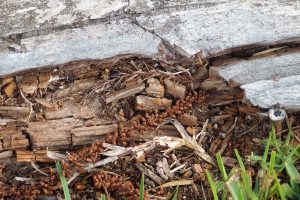
Look from an accessible position for shredded packaging, unusual accumulations, shed insect material or repeated activity behind storage. Do not pull apart a nest or move suspect items through the property. Take a location photograph and explain whether the item was recently brought indoors or has remained in the same place for months.
Reduce unnecessary clutter after the evidence is documented and the safe handling plan is clear. If the finding is in a service void, ceiling or electrical area, ask maintenance and the pest professional to coordinate access. A resident should not open a ceiling simply to establish what made a noise.
5. Recurring sounds or an unexplained smell
Write down when the sound occurs, how long it lasts and where it seems strongest. Sound can travel through a building, so the place where you hear it may not be its source. An air-conditioning component, pipe or neighbouring activity can require a maintenance response rather than pest treatment.
Treat smells in the same way: record the location and possible relationship to waste, moisture or inaccessible space, then arrange investigation. Do not accept a pest diagnosis based only on an odour. If there is a suspected electrical or gas hazard, follow the building’s immediate safety procedure instead of waiting for a routine pest visit.
Make a useful evidence record
Use a short note with five fields: date, exact location, observation, photograph and action taken. For example, write that an insect was seen twice beneath the kitchen sink and that a leak was reported, rather than recording a confirmed infestation without identification. Keep the original photographs so later inspections can compare the same location.
UC IPM’s overview places correct identification and monitoring before choosing control methods. Apply that principle by asking what evidence supports the diagnosis and what action will verify improvement. A visit should result in an explanation, not simply a product application.
When to request an inspection
Arrange help for recurring or spreading activity, suspected food contamination, damage to important materials, inaccessible sources or evidence you cannot identify. In an apartment, tell building management when the source may involve a shared area. Keep any previous treatment details available because they can affect the next investigation.
For routine prevention once the source is understood, use the home-prevention guide. Contact GRMC with photographs and the observation record to discuss an inspection. Finding early evidence is useful because it gives the investigation a starting point, not because it proves how many pests are hidden.
Frequently asked questions
Does one insect mean an infestation?
Not necessarily. Identification, location and repeated evidence help distinguish an isolated visitor from an established problem.
Can I identify a pest by its droppings alone?
Avoid a confident diagnosis from one photograph or shape. A qualified inspection should consider location and other evidence.
Should I vacuum suspected rodent droppings?
Do not dry sweep or vacuum them. Consult the linked cleanup guidance or arrange appropriate help before disturbing the material.
Does a scratching sound prove there are rats?
No. Record its timing and arrange investigation because maintenance and neighbouring sources can also produce sounds.
Should I spray before an inspection?
Ask the provider first and report any products already used. Unplanned applications can complicate both the evidence and the treatment plan.
What should I send a pest-control company?
Send clear photographs, exact locations, dates and the action already taken. Describe observations without assuming a species or hidden population size.