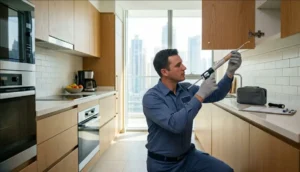
Home pest prevention means reducing access to food, water and hiding places while checking for new activity. For a UAE apartment or villa, start with the kitchen, wet areas and exterior openings. A small record of what you found and who will correct it is more useful than routinely spraying every room.
Prevention does not mean that a clean home can never have pests. Deliveries, luggage, adjoining spaces and maintenance defects can introduce problems into well-kept properties. The aim is to make likely issues easier to notice and correct, and to know when identification or professional assessment is needed.

Home pest prevention starts with a short inspection
Walk through the property in a consistent order. Look for spills, leaks, damaged screens, openings around services and stored items that prevent access for cleaning. Photograph defects before arranging repairs. Record the room and exact location so a landlord or maintenance team can find the same point without another visit to explain it.
Do not label every small insect as the same pest. Photograph a specimen where possible and note whether it is appearing near food, plants, drains or a sleeping area. Our early infestation signs guide helps separate observations from assumptions. The appropriate next step depends on what is actually present.
Kitchen: remove accessible food and inspect storage
Store opened dry foods in suitable closed containers and inspect packaging before putting deliveries away. If an item appears infested, isolate it for assessment rather than tipping it into another container with unaffected food. Cleaning the shelf while keeping the affected package does not resolve the source.
Clean spills, grease and crumbs in accessible areas, including around bins and movable appliances. Empty and clean waste containers as needed for your household. Avoid leaving pet food accessible overnight unless the animal’s care needs require otherwise; discuss a workable routine rather than removing essential food or water indiscriminately.
The University of California’s ant guidance links indoor prevention to food storage, cleaning, leak correction and closing entry points. Use that prevention logic, while remembering that ant management is not a treatment plan for every insect found in a kitchen. If activity persists, document its route and request identification.
Bathrooms and utility areas: fix the moisture source
Look under sinks, around washing-machine connections and near accessible air-conditioning condensate arrangements for drips or dampness. A towel placed under a leak is a temporary response, not a repair. Tell maintenance where and when the water appears, and check whether the area stays dry after work is completed.
Keep accessible drains and covers maintained according to the building’s plumbing instructions. Persistent insects near a drain need identification and a check of the source. Do not pour pesticide, fuel or mixed cleaning chemicals into plumbing. A service opening may need a plumber’s work rather than a stronger insecticide.
Doors, windows and balconies: close the right gaps
Check door seals and insect screens for visible damage, and look at pipe penetrations that are accessible without dismantling services. Ask maintenance to use suitable repairs. Do not block required ventilation, fire-safety openings or drainage in an attempt to seal every hole.
On a balcony, manage standing water in containers and plant saucers, keep waste enclosed and avoid allowing clutter to conceal defects. Review our Dubai balcony pest-proofing guide for that specific setting. Work on façade openings, bird deterrents or high-level features requires the building’s approval and suitable specialists, not improvised climbing or mesh installation.
Bedrooms, luggage and stored possessions
Inspect second-hand furniture and keep storage accessible enough to see the floor and wall edges. Do not move a suspect item through multiple rooms while deciding what it is. A photograph and a contained sample help avoid treating the wrong problem.
After travel, unpack in an area where you can inspect the case and handle laundry without mixing it with stored clean items. If bed bugs are suspected, follow our household bed bug action plan rather than spraying luggage with a general-purpose product. A prevention routine and treatment of a confirmed infestation are different tasks.
Use a record that assigns the next action
| Observation | First action | Who should own the follow-up? |
|---|---|---|
| Crumbs or an open food package | Clean and inspect the contents | Household member responsible for storage |
| Water under a sink | Photograph and report the leak | Resident and maintenance provider |
| Damaged balcony screen | Request a suitable repair | Landlord or building management |
| Insect repeatedly seen in one location | Record and request identification | Resident and pest professional |
| Activity in a shared corridor | Inform management with location evidence | Building manager |
Check that an action actually solved the defect. A closed maintenance request is not proof that a leak has stopped or a gap has been repaired. Keep a photograph of the completed repair and review the area during your next routine check. If insects remain, show the before-and-after record to the provider.
Before travel or a period away
Clear perishable waste, check stored food and arrange responsibility for any leak or alarm reported while the property is empty. Give a caretaker the locations of unresolved defects and the contact details for maintenance. Ask them to record new evidence rather than approving a blanket treatment without information.
The EPA’s pest-control precautions favour prevention and careful use of pesticides according to directions. A product described as natural or organic still needs suitable use instructions. If prevention is not enough, contact GRMC with the location, photographs and repair history to discuss an assessment.
Frequently asked questions
Does a clean home stay pest-free automatically?
No. Cleaning reduces accessible food and helps inspection, but pests can enter with belongings or through building defects. Keep prevention and monitoring together rather than treating cleanliness as a guarantee.
Should I spray the home every month?
A fixed chemical routine is not the starting point for every household. Identify the pest and the conditions supporting it first. Any treatment should suit the evidence, product directions and property.
Can I seal every opening myself?
Only address suitable, accessible defects within your responsibility. Do not block ventilation, fire-safety features or drainage. Ask maintenance or building management about service penetrations and shared areas.
Are essential oils automatically safe around pets?
Do not assume a natural description establishes safety. Products and animal sensitivities differ. Use clear product instructions and obtain appropriate professional advice instead of making a homemade mixture.
What should I tell the landlord?
Send the location, date, photographs and any associated leak or damaged fitting. Ask who will inspect and correct each issue. Keep the response with your observation record.
When should I call a pest professional?
Seek help when you cannot identify the pest, activity continues after reasonable prevention, or the issue involves hidden areas or specialist work. Provide evidence and previous treatment information. Avoid stacking several products while waiting for a diagnosis.